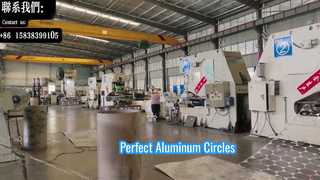
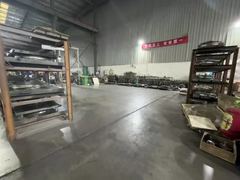
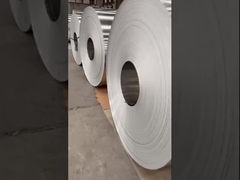
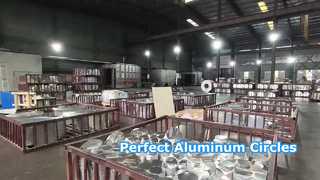
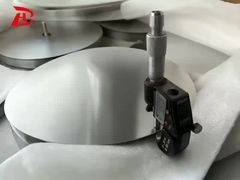
Breve: Únase a nosotros para una mirada de cerca al proceso de producción de círculos de aluminio de tamaño pequeño, diseñados específicamente para utensilios de cocina. Este video muestra la fabricación de discos de aluminio 1100 con un acabado pulido de laminado y 3 mm de espesor, destacando su excelente trabajabilidad y aplicaciones en utensilios de cocina.
Características De Productos Relacionados:
Made from 1100 series aluminum alloy, offering excellent resistance to corrosion.
Features a hot rolling process for a uniform mill finish and excellent formability.
Standard thickness of 3mm, suitable for deep drawing and spinning into cookware.
Available in diameters from 80mm to 1600mm to meet various kitchenware design needs.
Provides excellent welding characteristics and high ductility for complex shapes.
Silvery color and polished surface ideal for cookware like pots, pans, and kettles.
Manufactured with tight thickness tolerances of ±1% for consistent quality.
Suitable for a wide range of kitchenware including fry pans, pressure cookers, and bake-ware.
Las preguntas:
What are the key properties of the 1100 aluminum circles for cookware?
The 1100 aluminum circles offer excellent resistance to corrosion, superior formability, excellent welding characteristics, high ductility, and good conductivity, making them ideal for manufacturing various kitchenware items.
What sizes and thicknesses are available for these aluminum discs?
These aluminum circles are available in diameters ranging from 80mm to 1600mm, with thicknesses from 0.3mm to 6.0mm. The specific product featured has a 3mm thickness with a tolerance of ±1%.
What types of kitchenware can be made from these aluminum circles?
These aluminum discs are suitable for manufacturing cookware bottoms, fry pans, tea kettles, pressure cookers, pizza pans, rice cookers, restaurant cookware, coffee urns, electric skillets, bake-ware, bread makers, and stock pots.
How does the manufacturer ensure quality control?
Quality is guaranteed through pre-production samples before mass production and final inspection before shipment. The factory strictly controls the production process to avoid defects like orange peel patterns and ensure excellent tensile properties.